Here you will find news relevant to the activities of the initiative including webinars, talks, consulting projects, publications, participation in conferences and meetings mostly relevant to resilience of critical infrastructure with emphasis on transport and energy assets and their intra/interdependencies, views on the UNs Sustainable Development Goals and use of digital and emerging technologies in infrastructure resilience- and sustainability-based management
10
Sep 25
Professor Stergios A. Mitoulis delivers invited lecture at Tongji University on Sustained Resilience in the Built Environment
Shanghai, China — September 2025
Professor Stergios-Aristoteles Mitoulis, Professor at University College London (UCL), The Bartlett School of Sustainable Construction, delivered an invited lecture at Tongji University, Department of Geotechnical Engineering.
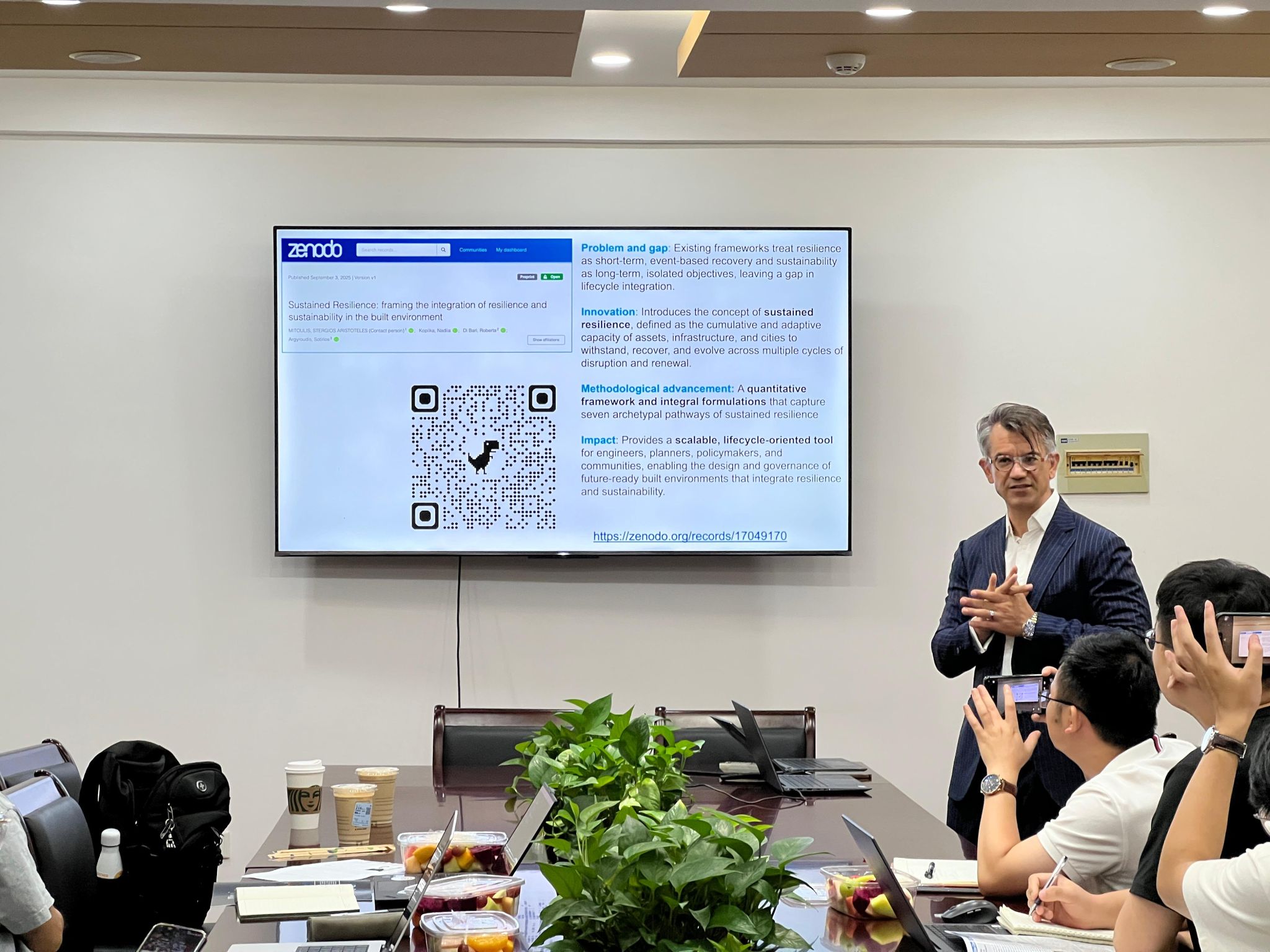
The lecture, titled “Sustained Resilience: Framing the Integration of Resilience and Sustainability in the Built Environment”, introduced the concept of sustained resilience as a lifecycle-oriented framework that bridges short-term resilience with long-term sustainability.
Professor Mitoulis delivered seven pathways — from deterioration and breakdown to proactive advancement and regulatory uplift — showing how cities and infrastructure can not only withstand disruptions but also learn, adapt, and evolve.
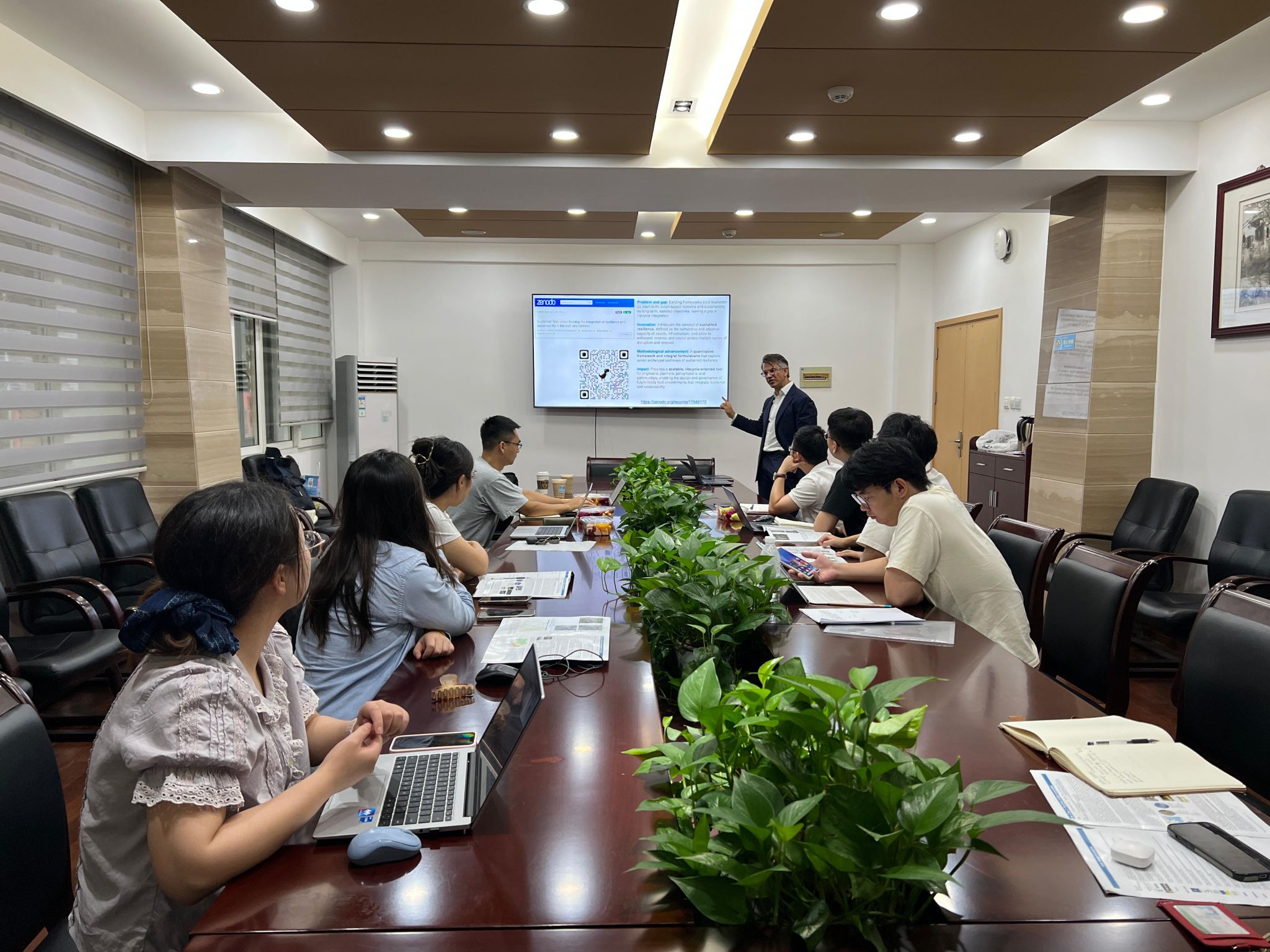
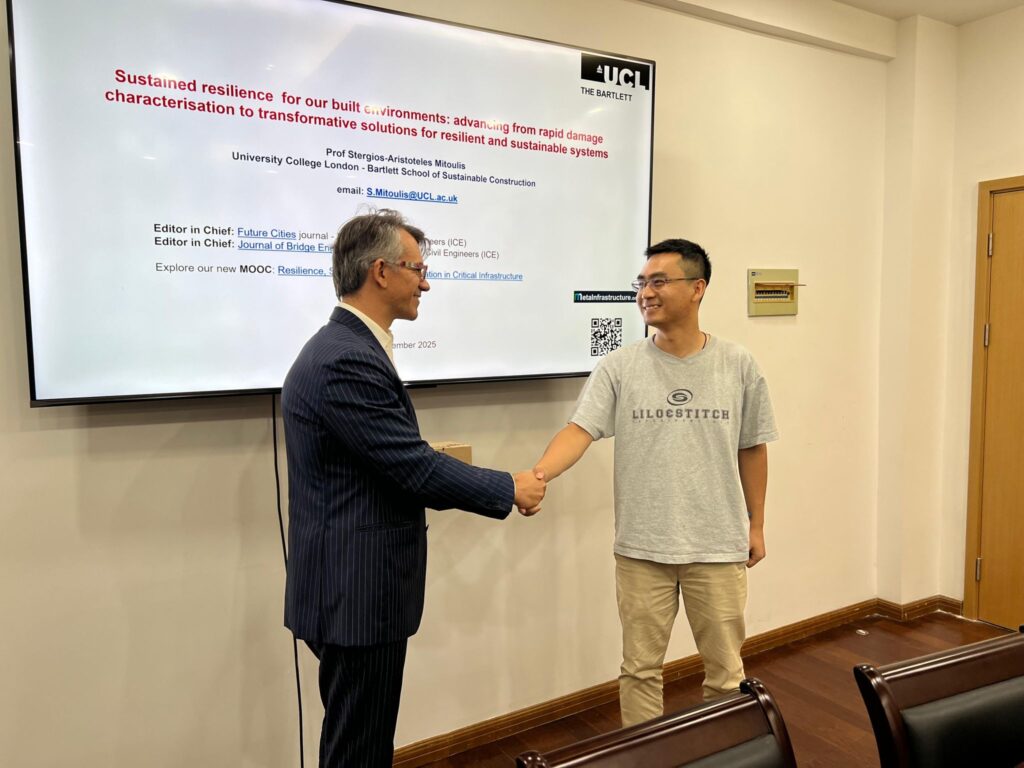
He expressed his gratitude to Professor Zhongkai Huang for the kind invitation and inspiring discussions, and to colleagues and students for their enthusiastic engagement and insightful questions.
This lecture reflects Professor Mitoulis’s ongoing contributions to advancing knowledge at the intersection of resilience, sustainability, and infrastructure digitalisation, aligned with the mission of MetaInfrastructure.
9
Sep 25
Prof. Stergios A. Mitoulis delivers keynote lecture on Wildland Urban Interface and Critical Infrastructure at the Chinese Academy of Sciences
Beijing, China — September 2025
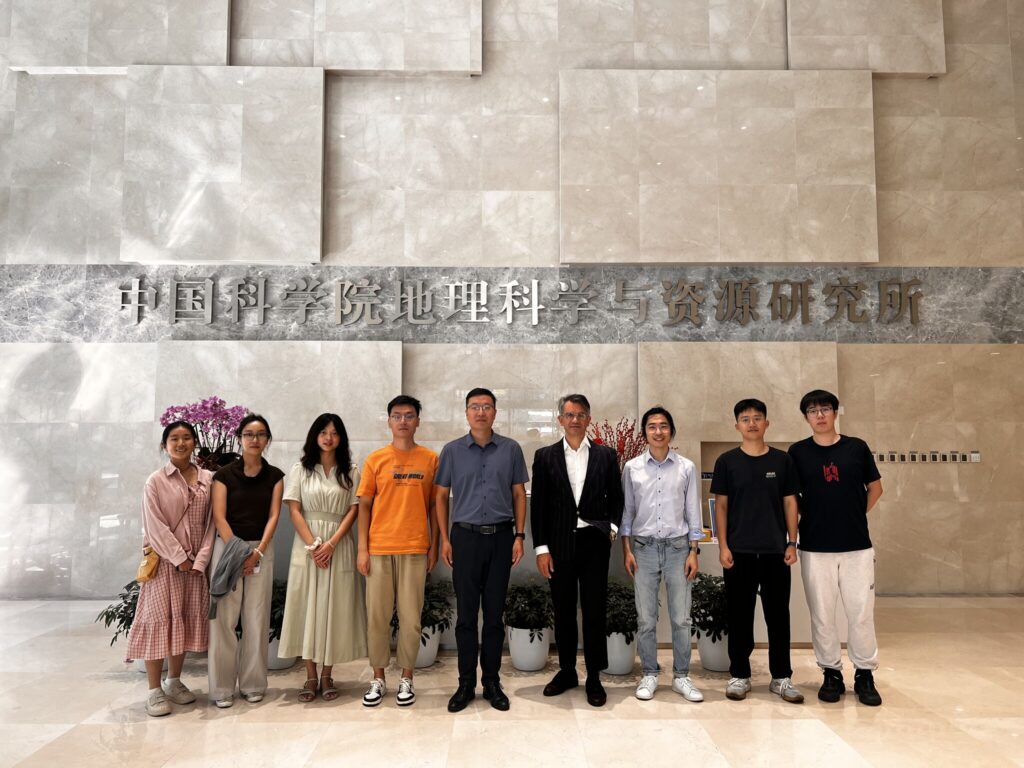
Prof. Stergios-Aristoteles Mitoulis, Associate Professor at University College London (UCL), The Bartlett School of Sustainable Construction, was invited to deliver a distinguished lecture at the Chinese Academy of Sciences, Institute of Geographical Sciences and Natural Resources Research, Beijing.

The lecture, titled “Wildland Urban Interface and Critical Infrastructure: A Missing Link in Wildfires Resilience”, addressed the vulnerabilities of the Wildland–Urban Interface (WUI) and presented a framework for strengthening infrastructure resilience across the wildfire cycle — before, during, and after events. Prof. Mitoulis highlighted the use of fragility curves and digital tools to inform future-ready standards in wildfire resilience.
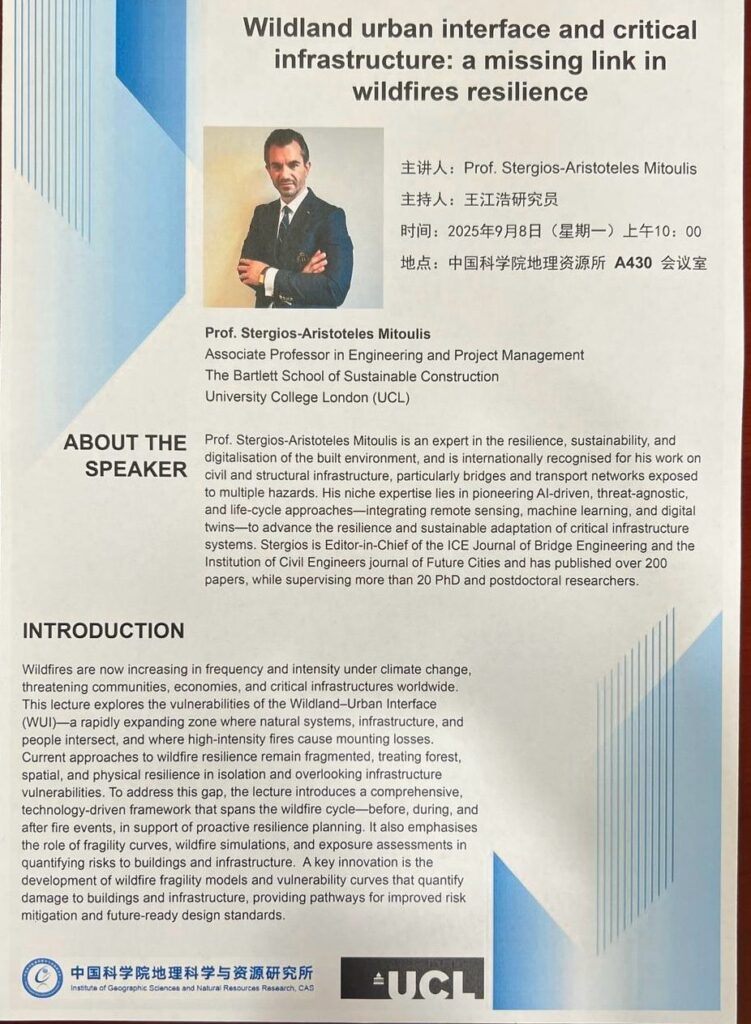
He expressed gratitude to Professor Jianghao Wang for the invitation and warm hospitality, as well as to colleagues and students for their stimulating discussions and exchange of ideas.
Prof. Mitoulis emphasized the importance of international collaboration, noting that the engagement with the vibrant Chinese research community will pave the way for further joint work on resilience, sustainability, and the digitalisation of critical infrastructure systems.
Acknowledgements were extended to Dr. Yiming Xiang, Dr. Sotirios Argyroudis, and Dr. Stavros Sakellariou, alongside the ongoing support of the MetaInfrastructure initiative.
8
Sep 25
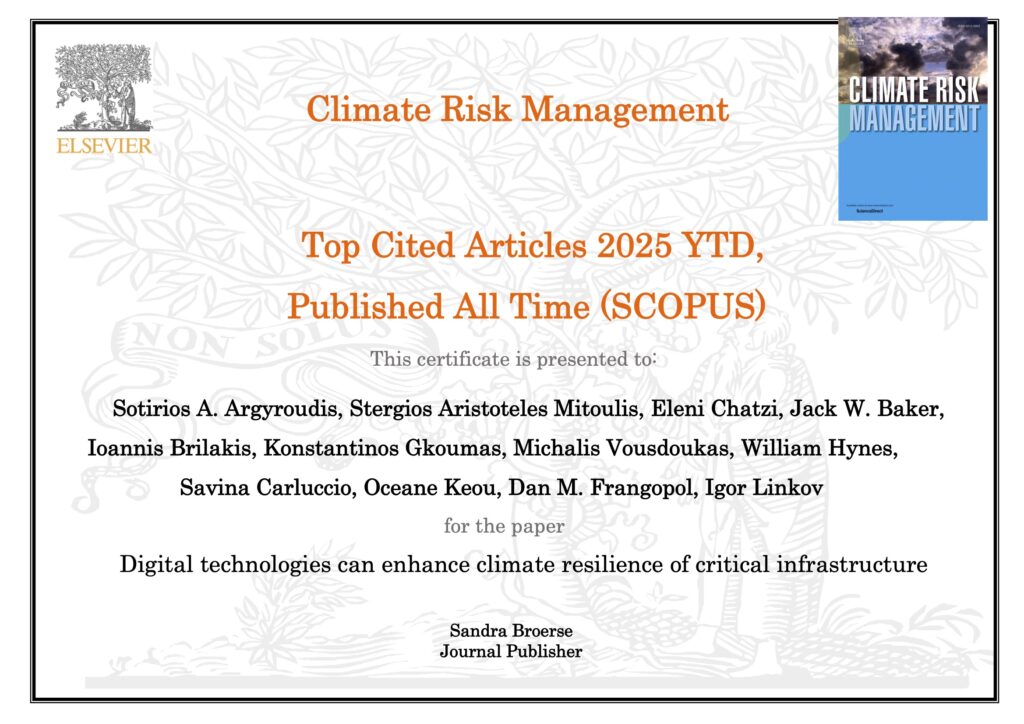
Recognition for Highly Cited and Downloaded Paper in Climate Risk Management
Our paper “Digital technologies can enhance climate resilience of critical infrastructure” has been recognised by Elsevier as:
✅ The #1 most cited paper in Climate Risk Management since January 2022
✅ Among the most downloaded articles in the journal
✅ Ranked #9 most cited paper of all time in the journal
✅ Now with 300+ citations on Google Scholar
-indicators of its impact.
This milestone underscores the urgent need for digital innovation in addressing climate risks to infrastructure, and the value of evidence-based insights in shaping resilient futures-core to our www.metainfrastructure.org group vision.
Huge thanks to co-authors and the broader research and practitioner community for engaging with our work. The paper is openly available here: https://www.sciencedirect.com/science/article/pii/S2212096321001169
27
Aug 25
New paper in Communications Engineering (Nature Portfolio)
In our new paper “Climate-resilient railway networks: a resource-aware framework”, published in Communications Engineering (Nature Portfolio), we propose a probabilistic framework to assess how coastal hazards and sea-level rise impact railway networks—and how resource allocation strategies influence recovery and resilience.
Authored by Anibal Tafur, Sotirios Argyroudis, Stergios Aristoteles Mitoulis, and Jamie Padgett from Rice University.
The full paper is openly available: https://www.nature.com/articles/s44172-025-00493-4

18
Aug 25
Open-access article: A unified framework for sustainability & resilience in the built environment
MetaInfrastructure is pleased to highlight a new open-access article published in Sustainable Development:
“Enhancing Sustainability and Resilience Against Natural Hazards of the Built Environment — State of the Art and Development of a Novel Framework.”
The paper introduces a transparent, practical two-step framework that unifies sustainability and resilience assessment across the full life cycle of buildings and infrastructure. It:
- incorporates social impacts alongside environmental and economic dimensions,
- accounts for performance evolution over time, not just a single snapshot,
- and supports proactive, risk-aware decision-making for policymakers, engineers, and asset managers.
As climate change intensifies natural hazards, the framework offers a structured path to reduce risk while advancing long-term sustainability goals.
Access: Read the article on Wiley (open access): https://onlinelibrary.wiley.com/doi/10.1002/sd.70150
9
Aug 25
Resilience Models for Tunnel Recovery After Earthquakes — Published in Engineering (IF 11.6)
Thrilled to share our latest paper published in Engineering — the premier Engineering journal of the Chinese Academy of Sciences / Chinese Academy of Engineering (Impact Factor: 11.6).
Title: Resilience Models for Tunnel Recovery After Earthquakes
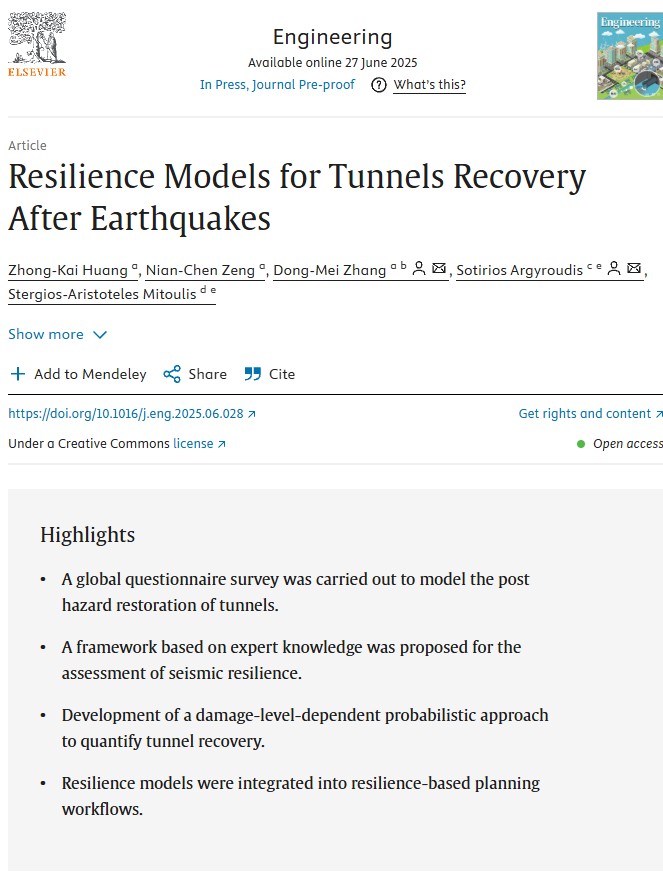
This work is the result of an exceptional collaboration with Tongji University’s world-leading engineering team, bringing together expertise to address a pressing global challenge:
How can we deliver more resilient tunnels to natural hazards?
Our research introduces—for the first time in the international literature—innovative resilience models that integrate engineering, data, and recovery planning to deliver faster, more robust post-disaster responses. These models can shape future infrastructure policy and practice, ensuring safer, more resilient cities worldwide.
Authors: Dr. Zhongkai Huang, Nian-Chen Zeng, Prof. Dongmei Zhang, Dr. Sotirios Argyroudis, Prof. Stergious A. Mitoulis
Acknowledgement: This research is supported by the ReCharged MSCA Staff Exchanges Project.
Read the article:
ScienceDirect: https://www.sciencedirect.com/science/article/pii/S2095809925003261?via%3Dihub
DOI: https://doi.org/10.1016/j.eng.2025.06.028
5
Aug 25
New Publication: Resilience Assessment Framework with Deterioration Modelling
We are pleased to announce the publication of our latest research in Results in Engineering, titled:
“Effect of deterioration on critical infrastructure resilience—Framework and application on bridges,”
authored by MetaInfrastructure group leader Prof. Stergios-Aristoteles Mitoulis and Prof. Davide Forcellini.
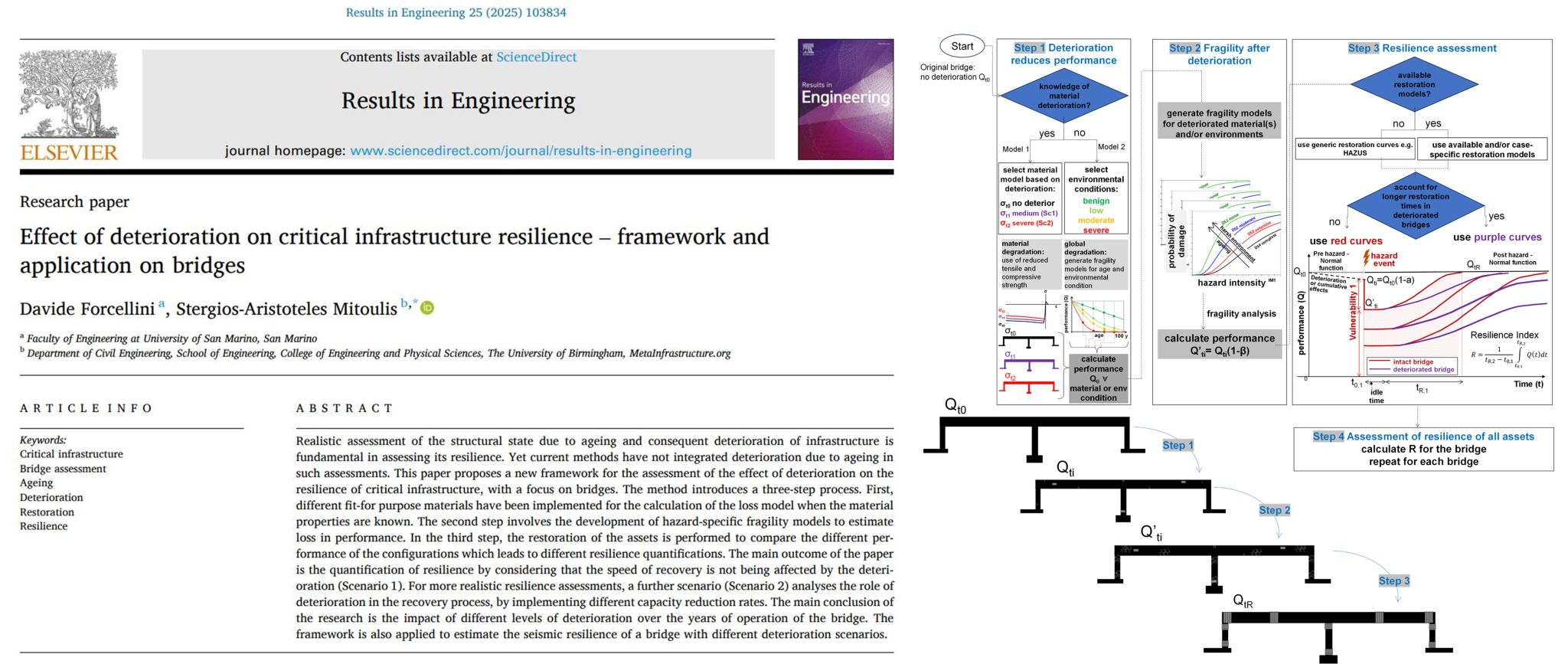
This study introduces a novel resilience assessment framework that explicitly incorporates ageing and deterioration in both the loss and recovery phases of critical infrastructure systems, with a focused application on seismic resilience of bridges.
Highlights of the research:
- The research highlights the direct integration of deterioration mechanisms in both fragility models and recovery processes.
- Differentiated resilience outputs across varying service lifespans (20, 40, and 60 years), reflecting environmental exposure and asset age.
- Development of realistic recovery curves for degraded infrastructure—addressing a critical gap in existing resilience models.
This paper has received early recognition, with 25 citations within two months of publication—demonstrating the relevance and potential impact of the proposed framework.
We gratefully acknowledge the support of the UKRI Horizon Guarantee and the collaboration within the MetaInfrastructure.org research group.
14
Jul 25
New MOOC Launch:
“Resilience, Sustainability & Digitalisation in Critical Infrastructure”
We are proud to announce the launch of our brand-new Massive Open Online Course (MOOC) on FutureLearn, titled:
Resilience, Sustainability & Digitalisation in Critical Infrastructure
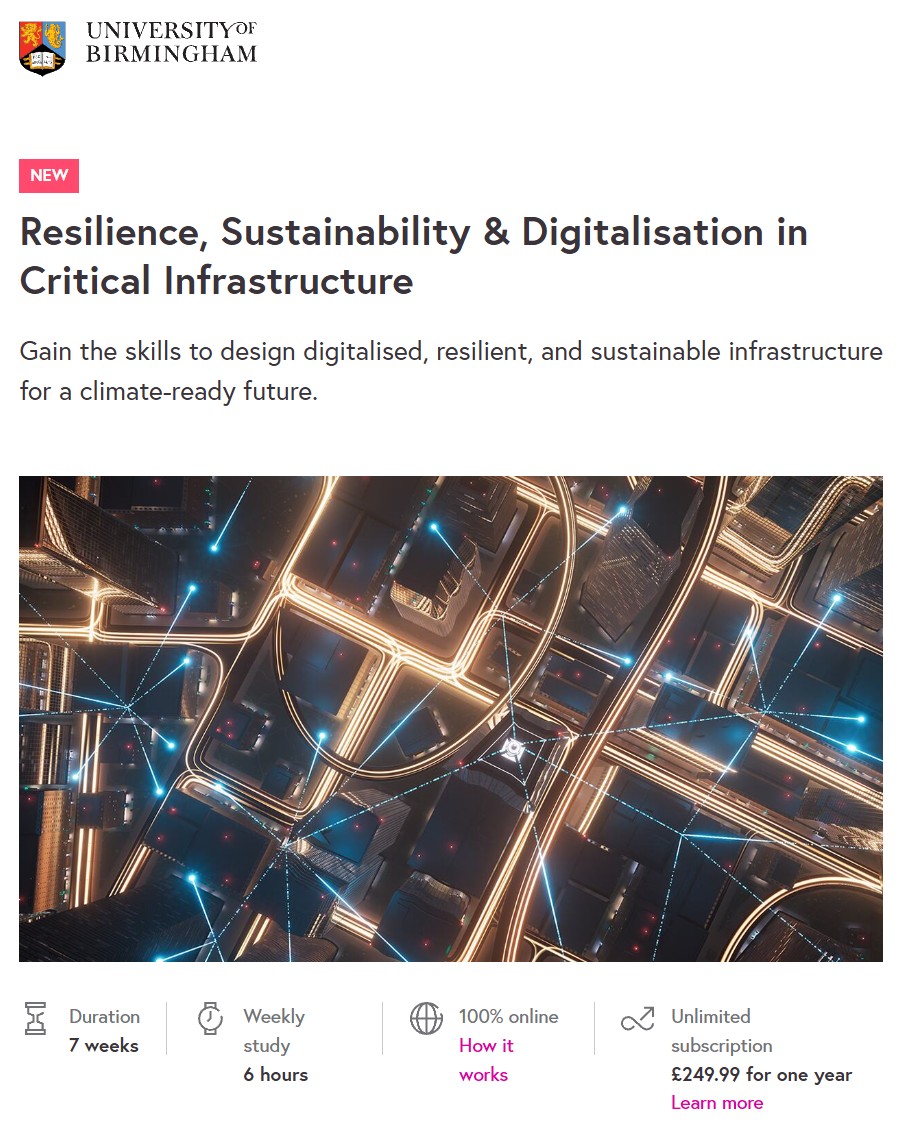
This is the first course of its kind, filling a critical gap at the intersection of infrastructure systems, technological innovation, and climate resilience.
The course is free and open to all, offering learners worldwide access to cutting-edge academic insights and practical tools to future-proof critical infrastructure.
Who is it for?
- University students and researchers
- Engineers, planners, and infrastructure professionals
- Policymakers and urban decision-makers
- Anyone interested in climate adaptation and sustainable development
The course is delivered in an engaging, interactive format with real-world case studies and actionable frameworks.
🔗 Enrol now via FutureLearn: https://www.futurelearn.com/invitations/university-of-birmingham/resilience-sustainability-and-digitalisation-in-critical-infrastructure/8yibu7quu2fh10e5adh0id3ua1ocfqe
25
May 25
Achilles’ Heel of Our Built Environment: Deterioration—Gradual, Pervasive, and Too Often Overlooked
How can we quantify the remaining service life of ageing infrastructure to build predictive, climate-resilient models for the future of our cities?

We tackle this challenge in our latest peer-reviewed publication, now published in Case Studies in Construction Materials (Impact Factor: 6.5):
Key Highlights:
- First corrosion model integrating climate data for ageing RC structures
- Case studies from Ukraine and Greece reveal a 25% variation in deterioration rates
- Identifies “Achilles’ heel” vulnerabilities in historic infrastructure
- Demonstrates how proactive adaptation can save billions in future infrastructure costs
- A timely contribution to resilient and sustainable development in a changing climate

Congratulations to Dr Nadiia Kopiika and heartfelt thanks to my co-authors, Prof. Peter Robery and Prof. Jelena Ninic.
Let’s rethink how we maintain, model, and manage our infrastructure before deterioration becomes irreversible.
21
May 25
MetaInfrastructure Attends the 4th EU Mission Adaptation Forum in Wroclaw, Poland
MetaInfrastructure proudly participated in the 4th EU Mission Adaptation Forum, where leading experts, policymakers, and stakeholders gathered to address the pressing need for climate-resilient infrastructure across European cities and regions.

Key discussions highlighted the role of smart financing tools—including taxation, insurance, reinsurance, and public-private partnerships (PPPs)—in accelerating urban adaptation strategies. Emphasis was placed on cultivating a culture of sustainable urban development, backed by governance mechanisms that ensure political continuity and practical tools to combat greenwashing.

The forum reinforced a unified vision: future cities must be resilient, inclusive, and adaptable to emerging climate challenges. MetaInfrastructure remains committed to supporting this mission through knowledge sharing, collaboration, and innovation-driven urban strategies.